


6-bottle explorer pack "Charlemagne - The Emperor's Wines"
He knows this wine better than you think.
These wines on the palate – and suddenly Charlemagne feels very close.
The grape varieties in this package lead back to a time when Charlemagne began to deliberately spread wine throughout Europe – thereby creating the foundation of our current wine diversity.
Six historic grape varieties.
Rediscovered. Single-varietal. Experience them today.
- Wines from vines dating back to the time of Charlemagne
- Origin of European wine diversity
- Accompanied by a compact booklet
For all who don't just want to taste – but to discover.


What our customers are saying
Bewertungen
Im Paket enthalten
Alle Weine des Pakets sehen Sie auf einen Blick → hier
2024 Bormeo Verd, Tonneau
- 2023 Bormeo Verd, white wine, dry
- 12.5%Vol - 0.4 g/l RZ - 7.0 g/l Sre
- Enthält Sulfite
- bottled for: Historic grape varieties Wine and Sparkling Wine Manufactory GmbH - Vineyard Nursery - D-67599 Gundheim
für 0.75 Liter - 18,00 €/L
Produkt ansehen
2024 Green noble metal, tonneau
- 2023 Grüner Adelfränkisch, white wine, dry
- 13.0%Vol – 3.3 g/l RZ – 7.7 g/l Sre
- Enthält Sulfite
- bottled for: Historic grape varieties Wine and Sparkling Wine Manufactory GmbH - Vineyard Nursery - D-67599 Gundheim
für 0.75 Liter - 19,87 €/L
Produkt ansehen
2023 White Traminer, Tonneau
- 2023 White Traminer, white wine, dry
- 13.5%Vol – 1.4 g/l RZ – 7.0 g/l Sre
- Enthält Sulfite
- bottled for: Historic grape varieties Wine and Sparkling Wine Manufactory GmbH - Vineyard Nursery - D-67599 Gundheim
für 0.75 Liter - 17,07 €/L
Produkt ansehen
2024 Black-blue Riesling, Rosé
- 2024 Schwarzblauer Riesling, rosé wine, semi-dry
- 12.0%Vol – 11.4 g/l RZ – 5.8 g/l Sre
- Enthält Sulfite
- bottled for: Historic grape varieties Wine and Sparkling Wine Manufactory GmbH - Vineyard Nursery - D-67599 Gundheim
für 0.75 Liter - 14,53 €/L
Produkt ansehen
2023 Franc Pineau
- 2022 Franconian Burgundy, red wine, dry
- 13.5%Vol – 0.1 g/l RZ – 6.1 g/l Sre
- Enthält Sulfite
- bottled for: Historic grape varieties Wine and Sparkling Wine Manufactory GmbH - Vineyard Nursery - D-67599 Gundheim
für 0.75 Liter - 34,53 €/L
Produkt ansehen
2022 Blue Hangling
- 2022 Blauer Hängling, red wine, dry
- 13.0%Vol – 0.1 g/l RZ – 5.9 g/l Sre
- Enthält Sulfite
- bottled for: Historic grape varieties Wine and Sparkling Wine Manufactory GmbH - Vineyard Nursery - D-67599 Gundheim
für 0.75 Liter - 26,40 €/L
Produkt ansehen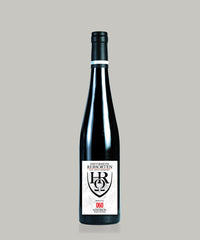
Im Newsletter mehr erfahren
Wir laden Sie ein kostenlos unregelmäßig Geschichte zu erfahren.
Zur Newsletteranmeldung
Diversity that shaped Europe
All wines included in the package


Charlemagne – How Diversity Came into Glass
Was ist die Ursprungsnummer?
Jede historische Rebsorte trägt ihren ursprünglich, geschichtlich und kulturell verankerten Namen.
In der Vergangenheit gab es zahlreiche Verwechslungen bei der Identifikation und Bestimmung dieser wiederentdeckten Weinreben.
Die gekennzeichnete Ursprungsnummer, bezugnehmend auf den Ursprungsnachweis, gibt Ihnen die Sicherheit das Original zu genießen.
Nr. 050: Bormeo Verd
Eine alte, aromatische Rebsorte aus dem Karpatenraum, die bis 2008 als ausgestorben galt. Bringt fruchtige Weine mit Zitrusnoten, eignet sich für Spätlesen, ist frosthart und wurde 2009 in der Pfalz wiederentdeckt.
Mehr erfahrenNr. 860: Weisser Traminer
Alte, aromatische Weißweinsorte mit Ursprung in Schirwan (Kaspisches Meer). Liefert goldgelbe, feine Weine mit langer Lagerfähigkeit. War Hauptsorte im Wallis und Franken, heute selten, aber traditionsreich und frosthart.
Mehr erfahrenNr. 101: Grünedel
Dieses Rebsorten-Juwel galt bis 2007 als ausgestorben, weil die Rebsorte fälschlicherweise für ein Synonym des Weißen Traminer gehalten wurde. Es überlebten nur 150 Rebstöcke aufgrund einer einfachen Verwechslung!
Mehr erfahrenNr. 234: Schwarzblauer Riesling
Alte Rotweinsorte mit kleinen, süßen Beeren, dunklem Waldbeeraroma und geringem Ertrag. Stammt ursprünglich wohl aus Armenien und war im Mittelalter an Mosel und Rhein verbreitet. Galt bis 2008 als ausgestorben, heute wiederentdeckt an der Mittelmosel.
Mehr erfahrenNr. 938: Franc Pineau
Der ECHTE späte Burgunder besitzt aromatische, dickschalige, fäulnisresistenten Beeren. Wuchs im Mittelalter im historisch fränkischen Raum und galt lange als ausgestorben – 2009 wiederentdeckt bei Halle. Ergibt kräftige, langlebige Rotweine.
Mehr erfahrenNr. 060: Blauer Hängling
Ausgestorbene, wiederentdeckte Rotweinsorte mit mittelstarkem Wuchs, dunklem, würzigem Weinprofil und Herkunft im Tressot-Komplex. Trauben reifen spät und liefern charakterstarke Rotweine.
Mehr erfahren